
Beeple Unleashes Robot Dogs With Musk, Bezos and Zuckerberg Faces in Berlin
A new exhibition in Berlin is turning heads—and unsettling minds—with robot dogs wearing silicone faces of global billionaires and art legends.
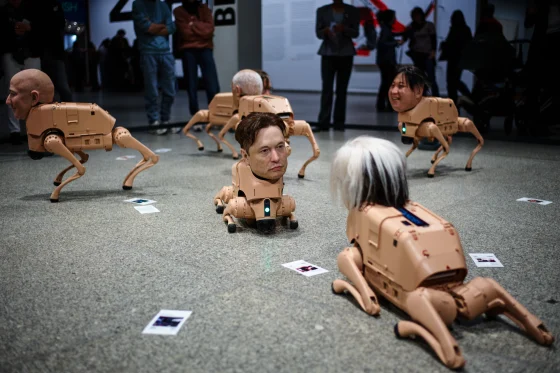
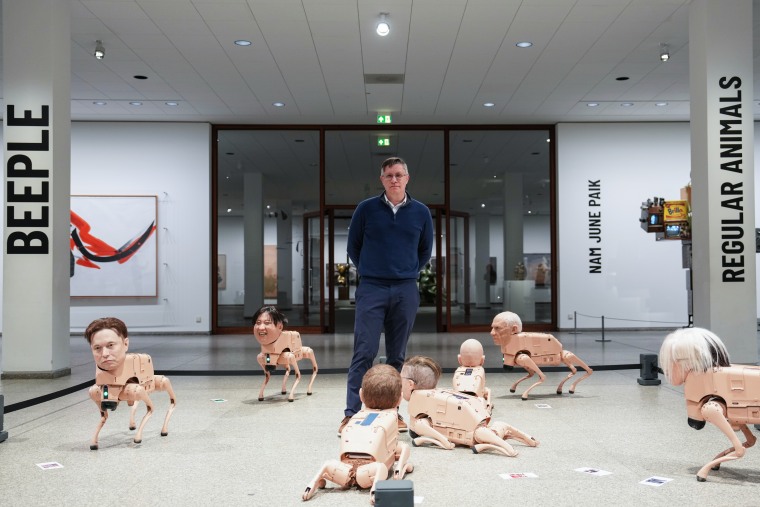
Created by digital artist Beeple, the moving machines feature likenesses of Elon Musk, Mark Zuckerberg, Jeff Bezos, Andy Warhol, and Pablo Picasso. As they wander through the gallery, they occasionally print altered AI-generated images of scenes around them—then eject them like excrement.
Yes, that is part of the artwork.
The installation, called Regular Animals, is being shown at Neue Nationalgalerie and is already becoming one of the most talked-about contemporary exhibits of the year.
At first glance, the piece looks playful and absurd. But its message is deeply serious.
Each dog transforms captured reality according to the “mind” of the person whose face it wears. A Picasso dog reimagines the world through Cubism. A Warhol dog turns everyday scenes into pop iconography. A tech billionaire dog symbolizes something more modern: algorithmic control.
Beeple says that in previous eras, society’s perception was shaped by artists. Today, he argues, perception is increasingly shaped by owners of technology platforms whose algorithms determine what billions of people read, watch, click, and believe.
That makes the exhibit less about dogs and more about power.
Unlike governments, algorithm owners can change public experience instantly. They do not need legislation, elections, or public debate. A tweak to a ranking system or recommendation engine can quietly redirect attention across the globe.
Beeple transforms that invisible influence into something visible, physical, and almost comically grotesque.
The dogs also mirror celebrity culture itself. Billionaires are no longer only business leaders—they are personalities, meme figures, political actors, and symbols of the age.
By placing their faces on robotic animals, Beeple invites viewers to ask whether society admires these figures, fears them, or simply follows them.
Curator Lisa Botti said museums are places where society should process technological change, especially the rise of artificial intelligence.
That explains why the Berlin setting matters. In a museum long associated with modern art history, Beeple inserts a distinctly 21st-century anxiety: what happens when machines mediate reality more than humans do?
Beeple is no stranger to spectacle. In 2021, his NFT collage Everydays: The First 5000 Days sold for over $69 million at Christie’s, making headlines worldwide and cementing his place in art market history.
But unlike static digital files, Regular Animals moves, watches, prints, and performs.
It turns the audience into participants.
Some viewers may find the exhibit hilarious. Others may find it cynical or unsettling. That divide is likely intentional.
Because Beeple’s greatest talent may be converting internet-era absurdity into gallery-worthy reflection.
And in a world increasingly shaped by feeds, filters, and billionaires, robot dogs wearing famous faces may not be as strange as they first appear.