Billionaire Tax Heads Toward California Ballot as Healthcare Funding Debate Intensifies
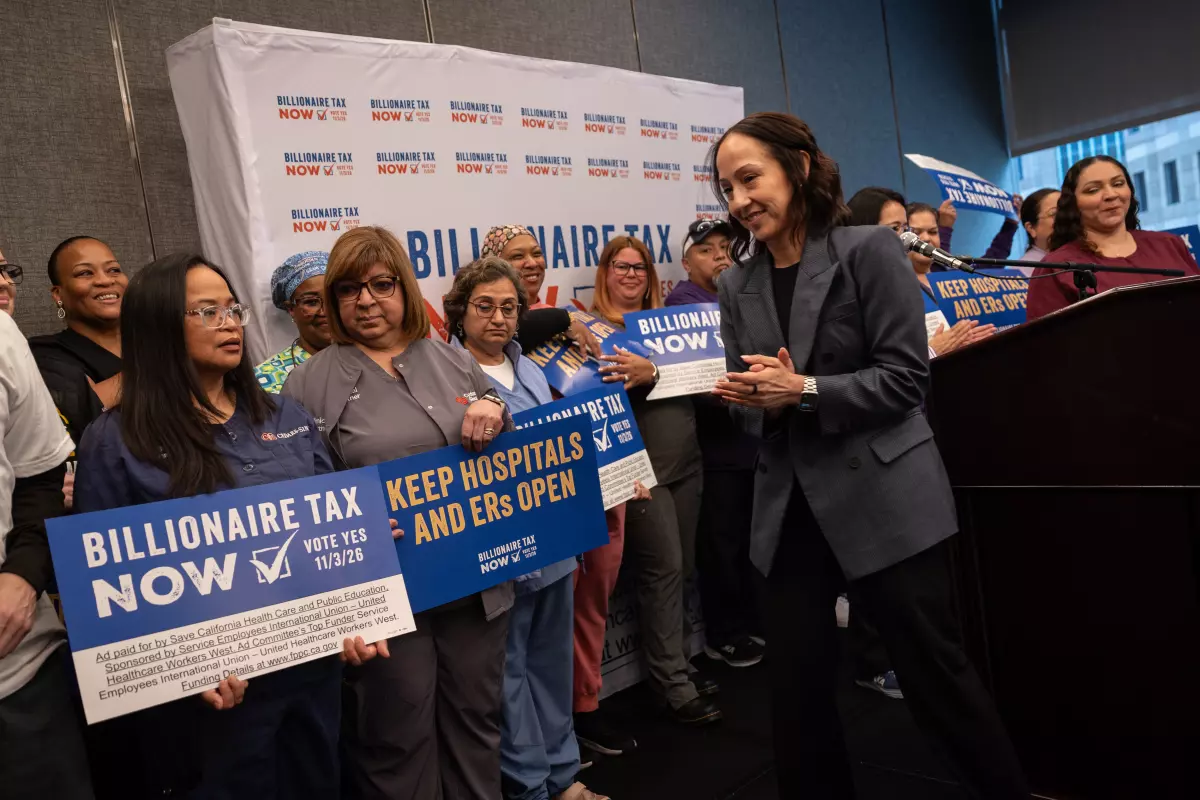
California may soon become the center of one of America’s biggest tax policy debates after advocates for a proposed billionaire tax said they gathered enough signatures to place the initiative on the November ballot. The measure would target residents worth more than $1 billion and direct most proceeds toward healthcare programs.
Supporters say the campaign has already submitted close to 1.6 million signatures to county election officials, well above the threshold required for qualification. If enough are validated, voters in California will decide whether to approve a historic levy on ultra-wealthy individuals.

The proposal was developed with strong backing from SEIU-United Healthcare Workers West, which says recent reductions in federal healthcare funding have left vulnerable communities exposed. Organizers argue hospitals are under strain, emergency rooms face pressure, and working families need stronger support systems.
Under the initiative, billionaires and certain trusts would pay a one-time tax of up to 5% on qualifying assets above the threshold, with payment spread over five years. Revenue distribution would heavily favor healthcare spending, while smaller portions would fund education and food assistance. Advocates describe the plan as a practical response to urgent social needs.
However, the proposal has sparked fierce resistance from business leaders, taxpayer groups, and several prominent political figures. Opponents warn that a wealth tax could drive investors and entrepreneurs out of the state, reducing future tax receipts rather than increasing them. Because California relies significantly on high-income taxpayers, critics say even a modest migration of wealthy residents could have outsized fiscal consequences.
The debate is not merely economic—it is political. California has long served as a testing ground for progressive policies, and this measure could become a national symbol in the larger argument over inequality and taxation.
Adding another twist, a rival measure called the “Transparency Act” is also seeking ballot qualification. Its supporters say California taxpayers deserve stronger spending oversight and accountability. But the measure contains provisions that could complicate or constrain future special taxes. If both initiatives pass, vote totals may determine which one takes precedence.
Money is already pouring into both sides. Billionaire donors and business-backed committees have committed tens of millions to opposition efforts, while unions and progressive groups continue funding the pro-tax campaign. This signals that the November contest could become one of the most expensive ballot fights in California history.
Notably, the issue has divided Democrats. Bernie Sanders has supported taxing billionaires more aggressively, aligning with progressive calls for redistribution. In contrast, Gavin Newsom has rejected state-level wealth taxes, citing economic competitiveness concerns. Other statewide candidates have split into pro- and anti-tax camps, revealing broader ideological fractures inside the party.
Supporters insist fears of a billionaire exodus are exaggerated. They argue many wealthy residents built fortunes through California’s unique innovation economy and still depend on its markets, infrastructure, and talent base. They also say the public strongly supports requiring the ultra-rich to contribute more during periods of fiscal stress.
Opponents counter that capital is increasingly mobile, especially in a digital economy where residency and business structures can shift quickly. They point to recent examples of wealthy individuals relocating operations or tax residency outside the state.
Whatever the outcome, the measure represents more than a tax question. It reflects competing visions of how California should fund public services, attract investment, and respond to widening inequality.
If voters approve the billionaire tax, it could inspire similar proposals elsewhere in the United States. If they reject it, critics may argue that even in a progressive state, there are limits to how far voters are willing to go on wealth redistribution.
With signature verification underway, all eyes now turn to November. California’s decision could reshape the national conversation on taxes, fairness, and the future of state finance.