
Half Brown, Half Orange: New England Fascinated by Extremely Rare Lobster Discovery
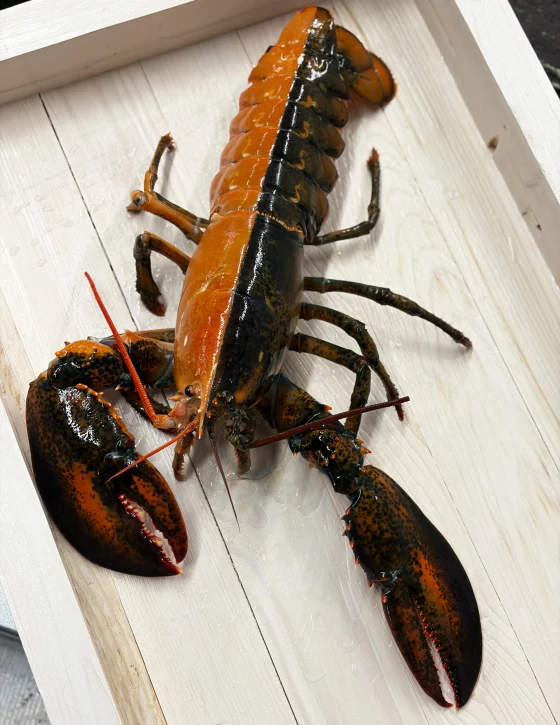
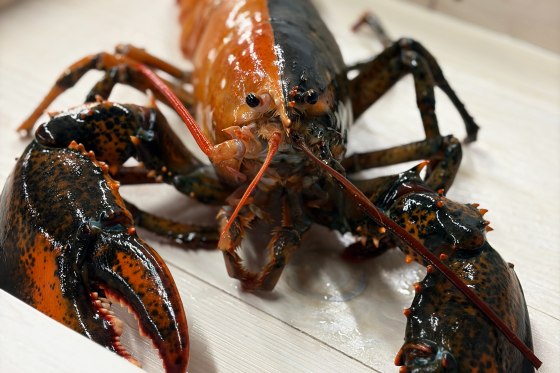
A stunning marine discovery off the coast of Cape Cod is drawing widespread fascination after fishermen caught a lobster with one of the rarest appearances ever seen. Perfectly divided in color, the animal is brown on one side and bright orange on the other, creating a dramatic split straight down its body.
The rare lobster was caught in mid-April and later brought to Wellfleet Shellfish Company. Staff quickly realized the animal was far too unusual to be treated like a routine seafood catch. Instead of entering the food supply, it was donated to Woods Hole Science Aquarium for preservation and public display.
Stories of rare lobsters tend to capture public imagination, but this case stands out even among unusual finds. Blue lobsters and orange lobsters occasionally appear in fishing communities across New England. Yet a clean two-sided split pattern is much less common, making this animal especially notable.
The lobster’s shell shows a near-perfect division: traditional dark brown coloration on one half and vivid orange on the other. The separation extends from the head across the claws and continues down to the tail, making it look almost artistically painted.
Marine scientists say such unusual coloration can result from developmental anomalies early in life. One theory is that two lobster embryos may merge during growth, creating a single lobster with genetically distinct halves. This phenomenon, while extremely rare, can produce bilateral differences in shell color and sometimes even subtle anatomical variation.
Another possibility involves pigment-related mutations. Lobster shells contain compounds that can shift in appearance depending on genetics and protein structure. When these biological systems behave differently on each side of the body, rare visual outcomes may occur.
The American lobster is naturally adapted for camouflage. Its normal brown-green shell helps it blend into rocky Atlantic seafloors, reducing visibility to predators. Bright orange coloring, by contrast, can make a lobster more conspicuous in the wild. That makes the survival of a half-orange lobster even more impressive.
Experts often caution that probability estimates for rare lobster colors are rough approximations rather than precise science. However, all agree that animals like this are exceptionally uncommon and rarely seen by the public.
The lobster is currently being housed temporarily while Woods Hole Science Aquarium undergoes renovation work. Care is being provided through holding facilities associated with the Marine Biological Laboratory. Once the aquarium reopens, visitors will have the chance to view the animal in person.
That future exhibit is expected to attract strong interest from tourists, families, students, and marine enthusiasts. Rare animals often become ambassadors for science education, helping explain genetics, marine ecosystems, and biodiversity in ways that resonate with the public.
For coastal communities, lobster fishing remains both an economic activity and a cultural tradition. Every now and then, a catch becomes something larger than commerce—a moment that connects working fishermen with science and public wonder. This split-color lobster is exactly that kind of story.
The donation decision has also been praised as an example of stewardship. Rather than monetizing the rarity, the company chose to turn the discovery into a learning opportunity. That move ensures thousands of people may eventually see and learn from a creature few would otherwise encounter.
In a world where many people feel nature has become predictable or overexplored, finds like this tell a different story. Beneath familiar waters, extraordinary anomalies still emerge unexpectedly.
For now, the half-brown, half-orange lobster waits in temporary care—but its reputation has already spread far beyond Cape Cod. When the aquarium doors reopen, one of the Atlantic’s rarest residents is likely to become a star attraction.