
Navy Secretary Fired Amid Iran Conflict as Pentagon Leadership Faces Turbulence
The sudden dismissal of John Phelan has sent ripples through Washington, marking another high-profile shake-up within the defense leadership during a critical geopolitical moment. The announcement, made by the Pentagon, confirmed that Phelan would leave his post “effective immediately,” raising questions about internal dynamics at a time when the United States is actively engaged in military operations related to Iran.
The decision comes amid ongoing tensions in the Middle East, particularly surrounding the U.S. naval blockade near Iran. According to officials familiar with the situation, the removal of John Phelan was not a single-issue decision but rather the result of mounting disagreements with senior defense leadership, including Pete Hegseth and Deputy Secretary Stephen Feinberg.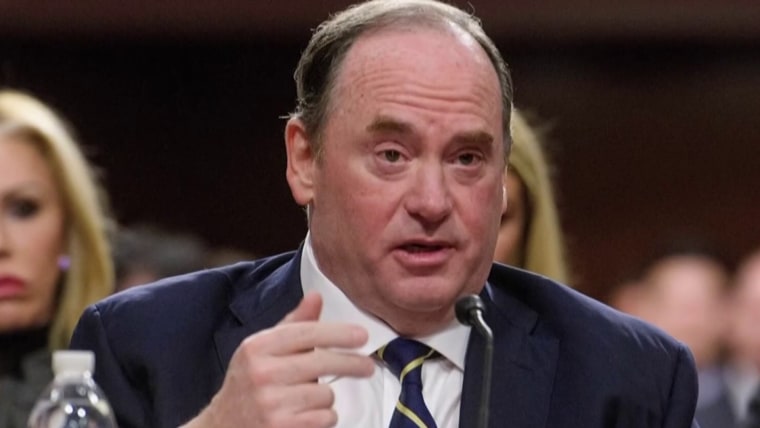
At the center of the conflict was the pace and direction of U.S. shipbuilding initiatives. The issue has gained increasing importance, particularly under the strategic priorities of Donald Trump, who has reportedly taken a personal interest in strengthening naval capabilities. Sources indicate that disagreements over execution speed and strategic control played a major role in the fallout.
In fact, decision-making authority over shipbuilding had already begun shifting away from Phelan in recent weeks, signaling a loss of confidence within the upper ranks of the Pentagon. This internal restructuring appears to have culminated in his abrupt dismissal.
The timing of the move has drawn particular attention. The U.S. Navy is currently enforcing a blockade in the Strait of Hormuz, one of the most strategically sensitive maritime corridors in the world. Recently, U.S. forces seized two vessels in the region, an action that Iran has publicly criticized as a violation of an existing ceasefire agreement. In such a tense environment, leadership continuity would typically be prioritized, making Phelan’s removal all the more surprising.
Lawmakers and defense analysts have expressed concern about the potential impact of leadership instability during an active military operation. While transitions are not uncommon in government, abrupt changes at the top of the Navy during a geopolitical crisis can introduce uncertainty into command structures and operational planning.
To fill the gap, Hung Cao, currently serving as Undersecretary, has been appointed as acting Navy Secretary. According to Pentagon spokesperson Sean Parnell, the transition is expected to be immediate, with Cao stepping into the role to maintain continuity in naval operations.
However, this is not an isolated case. Earlier this month, Pete Hegseth also oversaw the removal of the Army’s top officer along with two senior generals. These moves suggest a broader pattern of restructuring within the defense leadership, possibly aimed at aligning military operations more closely with the administration’s strategic objectives.
From a strategic standpoint, the U.S. is currently navigating a complex environment. The naval blockade of Iran represents a significant escalation, and decisions made at the leadership level can have far-reaching consequences. In such contexts, cohesion and clarity within the chain of command are critical.
The removal of John Phelan may reflect an attempt to accelerate decision-making processes, particularly in areas such as naval expansion and modernization. However, it also underscores the challenges of balancing political priorities with operational realities.
As the situation continues to evolve, attention will likely remain focused on how the Pentagon manages this transition and whether the new leadership can maintain stability during a period of heightened geopolitical tension. The coming weeks may prove crucial in determining the effectiveness of these changes and their impact on U.S. military operations.